

Sale!

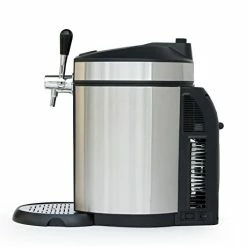
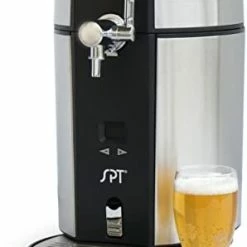
Cheap 🔥 SPT BD-0538 Mini Kegerator & Dispenser 🤩
Original price was: $180.47.$86.00Current price is: $86.00.
- Control the delivery date and try to deliver it in the fastest time
- The quality solution for all your needs.
- 100% High Quality Guarantee
- Safe Payments, Secure Personal Information

In 1993, Sunpentown International (SPT) was founded on the ideal of distributing well trusted appliance brands that offer innovation, value and quality.
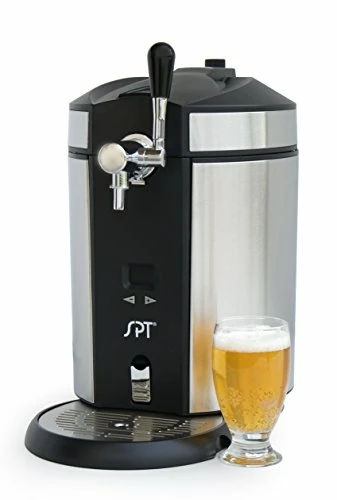
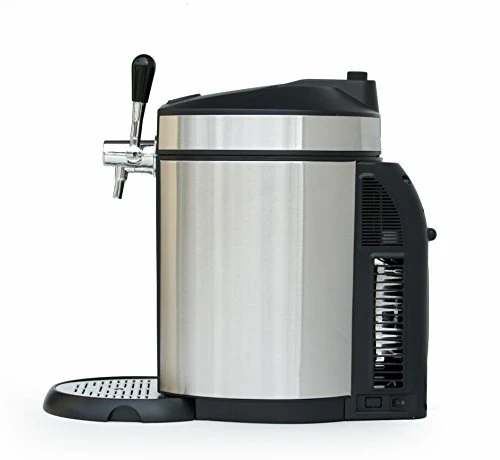
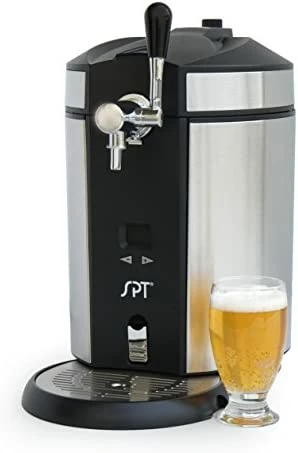
- Accepts standard 5 liter kegs and 5L Heineken mini kegs
- CO2 pressure control; Three (3) CO2 cartridges included
- Thermoelectric cooling technology
- LED temperature display; Adjustable temperature
- Stainless steel housing
| Size | Mini, Оne Расk |
|---|
3 reviews for Cheap 🔥 SPT BD-0538 Mini Kegerator & Dispenser 🤩
Add a review
Related products
Sale!
Kegerators
Original price was: $253.00.$85.00Current price is: $85.00.
Sale!
Kegerators
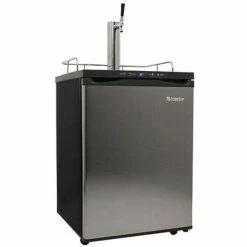
Buy 🎉 EdgeStar KC3000SS Full Size Kegerator With Digital Display – Black And Stainless Steel ✨
Original price was: $224.00.$95.00Current price is: $95.00.
Sale!

Original price was: $109.99.$92.00Current price is: $92.00.
Sale!
Original price was: $288.00.$86.00Current price is: $86.00.
Sale!

Kegerators
Original price was: $14.99.$11.99Current price is: $11.99.
Sale!

Original price was: $265.00.$99.00Current price is: $99.00.
Sale!

Kegerators
Original price was: $13.48.$10.78Current price is: $10.78.
Sale!


Original price was: $24.99.$19.99Current price is: $19.99.
Bob C –
I like this cooler. It fulfilled my needs and expectations, but it does have limitations. This review will concentrate on those limitations, which may make the review seem to be more negative than my rating. But I really do feel it deserves 4 stars. I am not fond of fishing in an ice chest for a can of beer. I wanted something a little more elegant for patio parties. That is why I bought this cooler, and it meets that need.This cooler holds 5 liter mini-kegs. That is 1.32 gallons or 169 fl.oz. – or about 14 glasses of beer. You should plan on changing the mini-keg during the course of a party. However, quick disconnects are used, so keg change is quick and easy.This cooler is not very efficient – either in power use or cooling capacity. The power draw is stated as 65W, which is about 40% of the power drawn by my full-size refrigerator. However, the cooling capacity is minuscule compared to a refrigerator. The cooler will keep a keg cold, but it takes most of a day to cool down a warm keg. You will want to pre-cool your kegs in a refrigerator – especially kegs that will be changed during a party. The minimum set temperature is 36F, which is where I have mine set. The cooler shuts off at 38F and restarts at 41F.The hoses used are small diameter, so the fluid stream is “weak”. It takes about 40 seconds to dispense a 12oz glass of beer. Increasing the keg pressure does not materially increase the flow rate, but it does increase the amount of foam on the beer. The CO2 pressure regulator should be set fairly low for a “normal” amount of foam. This is plain physics, not the fault of the cooler. When the keg is under pressure, CO2 dissolves into the liquid – which then reappears as foam when the beer is dispensed. Lower pressure, less foam.This cooler apparently uses a Peltier effect solid-state cooling module, so the only moving part of the system is the ventilation fan. The fan is louder than the fans used in tower-format desktop computers, but it is not objectionable. Outside on the patio, you have to listen hard to hear it. It is necessary to add water inside the cooler, so the keg is sitting in water. Presumably, the purpose of this water is to improve the energy transfer from the keg to the Peltier module. However, a quick drain tap is provided, so removing the water is easy.The power cord is short, so you will need to place the cooler near an outlet or use an extension cord.My one real complaint about this cooler is that the power cord is ungrounded – 2 wire. Seems to me this presents a safety hazard for an appliance that likely will be used outdoors. I could be wrong, but I don’t think a GFCI outlet or breaker will trip, under ground fault conditions, unless the appliance has the third wire (dedicated ground). The cooler has metal sides. The metal kegs sit in water that also is in contact with the Peltier module. I definitely would feel more comfortable if the cooler was grounded and had a contact to ground the keg as well. I plan to unplug the cooler each time I change the keg.
Peter S. Granger –
Works great. As a Brit I know how to use these things. Here are some tips from practical use of three of these things:1. Get the temperature down to 40F or less to prevent foaming. Put the keg in the fridge before putting in the kegerator to speed cooling.2. Don’t overgas on a new keg or you’ll get foaming. Great if you like German-style serving. Not if you don’t. Doesn’t apply to Heineken or Newcastle kegs as they’re pre-gassed. Expect foaming for the first pint or so with them. Should be ok after that.3. Some kegs better than others in terms of German kegs re connecting. Bitburger had the correct fittings. Warsteiner and others need to have the top fitting removed and replaced with the ones provided by SPT. A pain sometimes. The Heineken/Newcastle ones are easy connections. They’re provided by SPT. Easy drinking, but you’ll like other beers more as you try them.4. Now and again you’ll get a little gas escaping when putting in a new CO2 cylinder. I’ve found a little lube helps. I’ve had one bad insert. I decided it’s best to take the CO2 housing out of it’s clip in the lid and put the canister in vertically. If you get leaks, check the black o-ring. Replace if it looks distorted or worn. SPT provide spares. I’ve done this once.5. You can get beer-branded handles off Ebay (lots) or Amazon (few). Makes it easy for party guests to see what they’re drinking!6. It’s ok to re-use kegs and decant the beer you like from cans, growlers and bottles you like. The alcohol, refrigeration and carbonation are the three reasons it will stay fresh for weeks.6. That’s it. Everyone loves it when they come to my house! Shop around for good prices on kegs. Total and More often have specials, and their Newcastle is cheap at the time if writing.
Amazon Customer –
EDIT: (two or so weeks later) Prepare more than one keg for this. A 1 gallon keg of beer didn’t last me long at all! (Haha) I had a successful full gallon. I would not force carb anything in this, you will go through q few cartridges.One point, sometimes the cartridges are difficult to change, but take your time, throw a little keg lube on the connection and I will be great.Just got this in last night, used a little common sense with it. I cooled my Homebrew down, cooled the keg down, (threw it in the fridge for 2-3 hours) and then added the 800mL of water. Turned on the unit, set my temp, and while i waited for the beer to cool and keg, that also was cooling.By the time it hit my temp, i pulled my beer and keg from the fridge, nice and chilly. Transferred, and plopped it in. Maybe 1 degree warmer, but, heck, i kept that temperature all night.My only issue was when i charged the line with CO2, i did hear a hissing sound, and felt where gas was escaping from the connection to the keg tube, when i pushed in the line, the leakage stopped. Added some keg lube, less of a hiss. Cranked the CO2 off, disassembled the gas tube, added an o-ring to where it connects to the keg stick, lubed it up, popped it in, tighter fit, but no leaking at all anymore. Charged it up, and will check on it tonight after work. Didn’t see that in the instructions, but figured it might help others.My honest opinion, read the manual, front to back. Understand it. Its a rough read, the photos are very dark, like photo copied and grainy, but understand the unit first before attempting anything. Most if not all the problems others had were answered, or touched on. Some common sense helps a lot. (If i put a room temperature piece of metal in warm water, its going to take a LONG time to get that temperature down. Throw it in the fridge!)One star subtracted because of the manual, and the gas leak, but again common sense and figuring things out solved the issue! Lastly, not knowing how much CO2 is being introduced, just a “-” and “+” are a little wonky to me. Give me a small gauge?Overall, I would totally recommend this to anyone that does small batches, like myself (i like to experiment before i make a 5 gallon plunge) to keg. Do your research, understand what you are doing, this is a great device 🙂